Showing posts with label men's issues. Show all posts

Sunday, March 18, 2018

March 18, 2018 - The film vault: 'Cat on a Hot Tin Roof,' latent homosexuality and loads of mendacity

Brick Pollitt risked being pegged as weak and less than a man when he ventured into territory that was unexplored at the time – the heart of a man.

—
By Christopher M. MacNeil

A dysfunctional family before dysfunctional was a word, greed and avarice, alcoholism and “clicks,” smoldering but repressed sexuality, latent homosexuality – and lots and lots of mendacity.

All those things and more are the ties that bind the Pollitt family in the 1958 film version of playwright Tennessee Williams’ smoldering stage play “Cat on a Hot Tin Roof.” Who would care today if Brick and pro football buddy Skipper had a bromance going, and would anyone blame Maggie the Cat if she jumped off the sizzling hot tin roof and into the bed of her husband’s gridiron hero? Tame stuff by contemporary mores, but steamy and scandalous material for a conservative and sedate 1950’s America.

Nonetheless, “Cat on a Hot Tin Roof” was a critical success with nary a bad review and, produced on an estimated budget of $3 million, hauled in a box office of more than $17 million domestically and $25 million worldwide – the equivalent today of nearly $140.5 million and more than $206.6 million, respectively.

Yet an underlying commentary of the film went ignored by movie critics at the time if it was even considered at all, perhaps as taboo or too risky, namely the challenge to the social definition of masculinity and what was – and wasn’t – expected of a man. That commentary, ignored and not considered in 1958, remains as pertinent today as it did then, nearly 60 years ago.

From that point of view, “Cat on a Hot Tin Roof” is Paul Newman’s vehicle from opening to final scene. We first see Newman’s character of Brick intoxicated and poised to reclaim a lost glory from his high school days by jumping high hurdles in an empty athletic field at 3 o’clock in the morning. Against a backdrop of imagined cheers of onlookers long since gone, Brick clears three hurdles before crashing down onto the fourth one and breaking his ankle.

Flash forward to Brick in pajamas on a sofa in a bedroom of his daddy’s majestic Mississippi mansion and nursing what we know to be yet another drink, a crutch straddled over his chest. The crutch comes later in the film to be symbolic of Brick’s other crutches – on alcohol, self-disgust over his inaction in football buddy Skipper’s suicide, on the walls he’s erected to keep wife Maggie the Cat at arm’s length and, above all, on his pain of being owned by Big Daddy instead of being loved as a son by a father.

Enter wife Maggie, played flawlessly by a sultry and drop-dead gorgeous Elizabeth Taylor in what may well be her first bona fide role as a grown-up actress after a seemingly effortless transition to adulthood from child player and teenage ingenue.

Brick and Maggie are at Big Daddy’s mansion with Brick’s older brother, “Brother Man” Gooper, and his wife, “Sister Woman” Mae, who are circling in to claim their share of the Pollick spoils while awaiting news if Big Daddy is dying. He is, and his legacy to his kin is an estate valued at nearly $10 million – $82.6 million in today’s currency – and some of the richest acres in the whole of Mississippi.

We learn quickly that Brick and Maggie don’t share a bed and are at odds for reasons not then disclosed. Maggie, sexually frustrated and childless, is desperate to re-ignite her passionless marriage to a husband who has abandoned his job as a sportscaster to take up “the occupation of drink,” as Maggie calls it. For his part, Brick seems resigned to a life forever tied to a wife he “cannot stand,” as failed owner of the defunct Dixie Stars pro football team and drowning his life’s permanent state of “mendacity” as a full-time alcoholic. As he professes to Big Daddy, Brick values himself as “not worth the cost of a decent burial.”

As the drama unfolds, Brick is alternately at war with Maggie and Big Daddy – and himself as he hints at the nature of his relationship to Skipper, a classic Tennessee Williams hint of homosexuality. But Newman, in a superlative turn that earned him his first Oscar nomination in a respected acting career, plays Brick as a man mortally wounded by the loss of an intense emotional relationship with someone who also happens to be a man.

An implication can be derived that the relationship between Brick and Skipper was not sexual but intensely emotional and filled Brick’s emotional void of a paternal role model and love. That impression seems validated as Brick, baby-blue eyes moistened with tears, confesses to Big Daddy his “disgust” at himself for failing to rescue Skipper from a suicidal nosedive out of an 11th-floor window of a Chicago hotel, and, later, as he crumbles in emotional devastation in his ultimate confrontation with Big Daddy, wrapped up by Brick’s profession, “I wanted a father who loved me.”

As Big Daddy, Burl Ives brings a commanding screen presence to the role. Born before the start of the 20th century, Big Daddy is a product of his time, a man defined by the social dictate that a “real” man works and provides for his family and whose worth is measured more by his material acquisitions and less by his humane and emotional composition. In Big Daddy’s world – and in Brick’s to a lesser extent – men don’t cry and emotional vulnerability is a weakness.

Facing his own mortality and his son’s emotional ruin, Big Daddy is caught between the dictates of manhood and masculinity and risking vulnerability by taking his son’s outstretched hand. In the end, the father takes what we hope is the wiser choice that will leave his son a legacy more enduring than blue stocks and bonds and strengthens Big Daddy’s acceptance of his imminent death.

At the same time, Maggie jumps off her hot tin roof into the lie of “an announcement of life.” A child is coming, “sired by Brick out of Maggie the Cat,” she proclaims to a family caught off guard. But Maggie’s lie is about to become truth, we are led to believe, after Brick counters Sister Women’s declaration that Maggie is lying. “No!” Brick protests. “Truth is something desperate, and Maggie’s got it.”

Then, in the closing scene before the credits role, we are left with the certainty that Brick and Maggie, alone and behind the locked door of their dimly lit bedroom, are going to give truth to her lie of a coming life.

As bold as “Cat on a Hot Tin Roof” was as a film, it apparently was watered down significantly from its original Broadway production as a play. Newman reportedly was not fully satisfied with the movie treatment of Brick’s relationship with Skipper and pushed for a fuller – and more candid – exploration.

The film also opened the door for Taylor to the more daring and provocative roles that defined her as one of Hollywood’s most acclaimed and respected actresses of the 1950’s and 60s. “Cat on a Hot Tin Roof” also came with a dark footnote for Taylor. During filming, her third husband, Michael Todd, was killed in a plane crash. In spite of that – or despite it – Taylor got her second Oscar nod as best actress. Another footnote is that Taylor was cast for the role over Barbara Bel Geddes, the actress who originated it on Broadway. Bel Geddes would have to wait 20 years before she landed what become her career’s signature role as Miss Ellie, matriarch and moral compass of another dysfunctional family, the Ewings of television’s “Dallas.”

Although it was nominated for six Oscars, including best picture, “Cat on a Hot Tin Roof” was apparently too steamy for conservative Academy voters at the 1959 awards ceremony. They passed the film in every category, each time in favor of the fluff – and safety – of “Gigi.”

Multidimensional and layered with multiple themes of manhood, family, sexuality, certain death and mendacity, “Cat on a Hot Tin” roof speaks to the definition of manhood almost 60 years after its release. Brick Pollitt risked being pegged as weak and less than a man when he ventured into territory that was unexplored at the time – the heart of a man. In the end, he did not sacrifice his identity as a man or his masculinity and gave men of his day and those from generations to come the strength to be emotionally vested in another man, to want to be loved, to feel pain – and to cry.

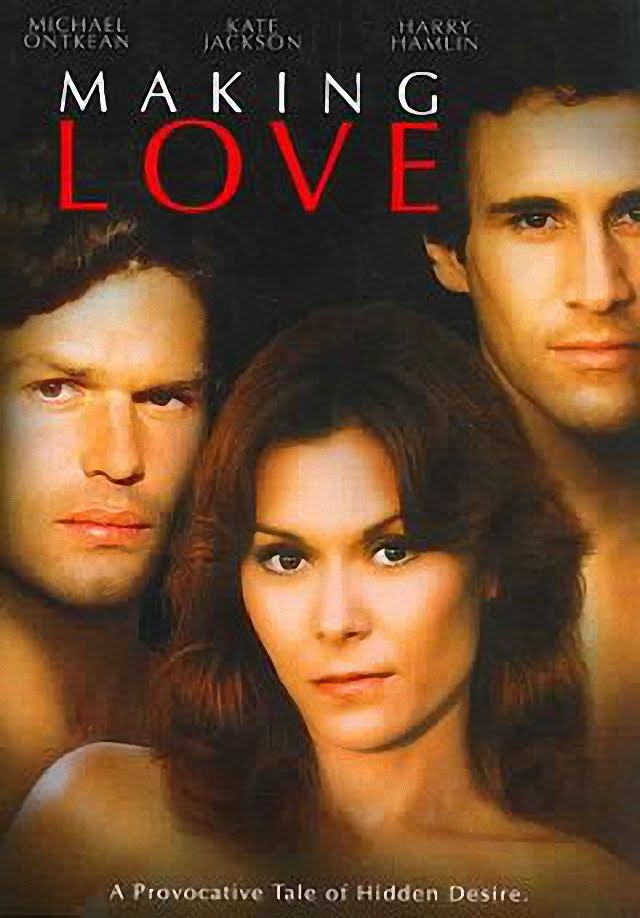
March 18, 2018 - The film vault: Before 'Brokeback Mountain,' there was 'Making Love'


Christopher MacNeil reminds us about the groundbreaking LGBT themed movie, its impact and its legacy.

—


Everyone come up for air.

Instead of more talk about a presidential administration that might be the most corrupt in U.S. history, lets come up for air — let’s go to the gay movies.

More than 20 years before the groundbreak and enormously successful “Brokeback Mountain” and lead actors who could have swooned even the most homophobic of straights, there was “Making Love” and its married leading man first exploring and then accepting his homosexuality. While arguably a pioneer in the gay-themed movie genre, less arguably, “Making Love” was a film before its time and, indeed, may have been a victim of its time.

Putting aside the audible groans of some moviegoers seeing two half-naked men in bed locked arm-in-arm in prolonged and passionate kissing, “Making Love,” made in 1981 and released the next year, was neither a commercial nor critical success. At the box office the film recovered $11.9 million of its $14 million production budget and was in U.S. theaters a mere 49 days. The movie’s title song, written by Burt Bacharach, Bruce Roberts and Carole Bayer Sager, was a runaway chart hit for singer Robert Flack, however, but not enough to translate into box office gold.

“Making Love” also generated little attention from mainstream movie critics with perhaps the most influential being Roger Ebert. He dismissed the film as “essentially a TV docudrama, in which the subject is announced loud and clear at the outset and there are no surprises. People have described the movie …in one sentence as ‘Kate Jackson finds out her husband is a homosexual,’ and they haven’t left out much.”

Unseen political and social forces may have at work against the film as well. In 1982, the conservatism of the Reagan administration had taken power just a year earlier and already had taken root. Any hope for the fledgling gay rights movement to go national and had begun in the more liberal 1970s had been effectively sequestered.

More insidiously, however, an ominous shadow had begun to darken America’s landscape by way of an emerging health crisis that threatened the very survival of the LGBT community – a recently identified disease, fatal to everyone who contracted it and with a name that spread fear and paranoia across the country: AIDS. That AIDS was first identified and contained among gay men and threatened the general, or straight, population effectively quashed hope for LGBT equality by forcing anyone suspected of being gay back into the closet.

But political and social commentary on the state of the gay union are spared in director Arthur Hiller’s movie. He instead confines his subject matter to the impact of homosexuality on a traditional heterosexual marriage when the husband begins to experiment with his long suppressed same-sex urges and ultimately surrenders to his sexual orientation.

Michael Ontkean is closeted and conflicted husband Zach Elliott, a doctor married eight years to Claire, played by Kate Jackson, a high-powered television executive. Zach and Claire are the embodiment of what would be one of the 80s’ catch phrases for up-and-coming power couples: DINK (dual income no kids). Their seemingly idyllic marriage lacks only the kids and a white picket fence to complete their Norman Rockwell snapshot. Their greatest problem seems to be catering to the frequent demands for attention by an elderly and lonely neighbor, Winnie, played with class by British actress Wendy Hiller.

Zach’s same-sex curiosity is awakened unexpectedly by Bart McGuire who walks into the doctor’s office with a case of hypochondria. Bart is a struggling writer and published author who, we are led to suspect, is also a promiscuous gay man. Played to stud perfection by Harry Hamlin, then a relative newcomer, Bart has left behind him a string of broken hearts with an express lane of one-night stands and always keeps himself a safe distance from emotional attachments.

His same-sex curiosity peaked by Bart, Zach nervously checks out a gay cruising spot and lands a guy who’s interested in him. But Zach quickly withdraws when the man he picks up begins to caress Zach’s leg, and it is soon thereafter that Zach ends up in Bart’s living room. After some awkward and contrived dialogue about hidden sexual desires, Zach uncharacteristically and boldy approaches Bart and the two are soon together in bed locked in each other’s arms – and lips.

All the while, unsuspecting wife Claire senses an unidentified wrong with her marriage. Communication with Zach is all but muted and sex between them is nonexistent. Claire forces Zach’s hand over dinner one night in the film’s climactic scene when husband comes clean to wife – and the film quickly advances to its final frame.

Despite Claire’s effort to save her marriage, the union is deemed irretrievable by Zach. By then, he has resigned himself to not having the kind of relationship he wants with Bart and that staying married to Claire would deny her a martial sex life and probably what she wants most – a child.

Their marriage over, Zach and Claire are reunited years later at the funeral of their one-time neighbor Winnie. Zach has gone on to a long-term relationship with another man and a staff position as an oncologist at the prestigious Mayo Clinic. Claire has landed her own success: a seemingly solid marriage to a faithful and heterosexual husband, the white picket fence of a sprawling house and the one thing she wants most: a child.

And Bart? The last we see of him is his silhouette against the darkness of a seedy alley in a gay cruising district and presumably to Bart’s to his next one-night conquest.

While “Making Love” fails to provide social and political commentary on being gay at the onset of the 1980s, it also does not treat its subject matter offensively by presenting gay men as either effeminate queens or sexual predators. Its focus, despite diagloge that is sometimes contrived and superficial, is limited to one man’s awakening to a basic truth within him and its impact on his marriage and very life.

Despite any conservative political and social dynamics that might have undermined it, “Making Love” seems not to been career breakers for its three lead actors.

Ms. Jackson came to the film with an already established actress, first with a cult following from her role as the often seen but never heard ghostly apparition Daphne, Quentin Collin’s unrequited and lost love interest in ABC-TV’s gothic daytime soap “Dark Shadows” and, shortly thereafter, as the wife of a cop in ABC’s primetime series “The Rookies.” But her role as the “smart” one of “Charlie’s Angels” solidified Ms. Jackson’s acting personna and celebrity status and within a year of “Making Love,” she landed her third hit TV series, CBS’ “Scarecrow and Mrs. King.”

Ontkean also brought to “Making Love” some name recognition from his role as a rookie cop, coincidentally, on “The Rookies.” Ontkean emerged later in the decade in a starring role on ABC’s critically acclaimed but surreal “Twin Peaks” and from there went on to star in a number of television miniseries.

Hamlin would find probably his most recognized alter ego in the late 80’s to mid 90s as irrasicble and over-sexed attorney Michael Kuzak on NBC’s “LA Law.” But Hamlin, in a 2014 interview, reflected that playing a gay character probably put a “ruffle” in his film career even though he had no regrets. On the face of it, Hamlin may be right. “Making Love” was only his second – and last – starring feature film.

Saturday, March 17, 2018

March 17, 2018 - On being a father for two hours ...and the aftermath

Being a dad is not measured in time, as writer Christopher MacNeil found out one night. He shares an experience that changed his life forever.

—

Author's note: The following is a first-person experience of the writer.
By Christopher M. MacNeil
The dark shadows of the thick clouds on the western horizon matched my mood that late November afternoon in 1990 as I drove the hour-long trip on Indiana’s flat and colorless I-69 to Riley Hospital for Children in Indianapolis to visit my 2-year-old niece. Born with an inexplicable “defect” in which 95 percent of her body was covered with what doctor’s described as burn tissue, my niece was to endure yet another surgery to remove her “burned” skin and replace it with grafted skin.
It had been less than two years since my last round as a drinking alcoholic and a failed suicide attempt that cold and dreary Friday afternoon. After years of alcoholic drinking and its resulting emotional and mental devastation, a myriad of emotions churned inside me. Many of my relatives, including my niece’s mother – my sister – harbored unresolved feelings for me – even hate – for what I’d become as an alcoholic, and the niece I was visiting hardly knew me. She was barely 5 months old when I made myself scarce from my family after my suicide attempt, and I feared she wouldn’t remember at best or, at worst, that my sister would refuse to let me see her and have me thrown out of the hospital.
At the hospital, I entered the burn unit and saw my sister and other relatives crowded around my niece in her room and lowered my head as I walked toward an uncertain reception I might get. It was then I noticed the screams and cry of what sounded like a little boy somewhere on the ward. They continued uninterrupted and without break. A silence fell in my niece’s room when I walked in. But my sister, who had less than two years earlier called the ambulance when she found me unconscious on the floor of my apparently from the pills I took to end my life, signaled me to greet my niece. Surprisingly to me, my niece remembered me: she called me by the nickname everyone else did.
Uncomfortable that I might be making everyone else uncomfortable, I stepped halfway out the door of my niece’s room while relatives adorned her with adulation. Standing there, I noticed that the kid’s screams and crying I heard when I arrived had stopped and, at the same time, I felt a slight nudge on the side of one of my shoes. Looking down I saw a little wind-up toy car that had hit by foot. I looked around and saw not far behind me a boy not more than 2 or 3 years old sitting on the floor, both hands bandaged and staring at me. I half-smiled at him, picked up the toy car and returned it to him, mindful not to hurt his hands. But as I returned the car with one hand and gently patted the boy’s shoulder with my other hand, I saw either uncertainty or fear in the boy’s eyes as he raised his arms slightly and shielded his chest.
It was less than a minute after I returned to my niece’s room, again half-in and half-out, when I felt a tugging on the sleeve of my coat. It was the kid again. He tugged my coat as if he wanted me to follow him. I did, to an area where he sat on the floor and indicated that he wanted me to sit down in front of him. He apparently wanted us to roll the car back and forth to each other. Not being in high demand in my niece’s room, I took the job.
I learned later the boy’s name was Michael, 2 years old. A nurse risked violating patient confidentiality when she shared that Michael was headed to foster care after discharge from the hospital, the injuries to his hands being second- and third-degree burns that were inflicted by his parents by holding his hands in the fire of an oven burner as “discipline.” Both parents were in jail awaiting trial or pleading out to charges of felony child abuse and neglect. Even if they avoided prison, Michael would not be returned to them. Child Protective Services had filed a petition to terminate parental rights because Michael had been the victim of multiple other substantiated episodes of abuse and neglect by his parents.
Michael and I rolled the toy car back and forth for about a half-hour when I noticed he needed a diaper change. I knew nothing about diapering and picked him up to take him to a nurse for the change. Picking him up, for a reason I still don’t understand 25 years later, I intuitively kissed Michael’s forehead gently. After finding a nurse to change the diaper, I handed Michael over to her. Suddenly and with full volume, Michael began to scream and cry and I realized only then it was he I heard crying and screaming when I first arrived. It explained a comment I overheard by a nurse who showed up for her work shift. She told a colleague it was “unusually quiet,” then, in a heightened tone, “Oh, God! Michael! Where’s Michael?” The other nurse pointed out Michael with me on the floor. The nurse who had just arrived then asked, about me, “Well, who’s he?” “Jamie’s uncle,” was the answer. “Oh,” was the reaction.
I stayed with Michael through his diaper change as the poor nurse maneuvered to get a fresh change in place while he trashed and screamed and tried to get up. When the nurse finally got the diaper changed, she returned Michael to me. In my arms, Michael stopped the screams and cries. His eyelids had become heavy by then and, instead of returning him to the floor for more play, I slid out of my coat and found a rocking chair to sit while holding him.
Michael fell asleep quickly, and I sat there rocking him gently for nearly an hour until I couldn’t put off the one- drive back home. And I tried as long as I could not to leave him: I wasn’t ready to give him up for reasons I didn’t understand then. But I stood up gently and found the nurse who had changed his diaper, the one to whom I’d give him up. The nurse and I almost pulled off the exchange without waking Michael. But he woke up and, when he did, he jolted everyone with maximum-volume screams and cries, the same ones I heard when I arrived two hours earlier. Michael bolted upward in the nurse’s arms and, as I rushed into my coat, he reached for me and cried, “No! Help me!” Those words have haunted me since. “I think you broke his heart,” the nurse said above Michael’s screams and, feeling the rush of stinging tears to my eyes, I muttered, “I’m sorry.” I turned and headed for the exit without saying good-bye to my niece and other relatives. By the time I found my car, my face was damp with tears. I couldn’t breathe. My plan to stop somewhere for dinner was shot by the sick in my stomach.
A storm of emotions raged within me on the drive home, the strongest my anger. The menacing memories of my own childhood engulfed me, and I thought about my relationship with my own father and my firm promises as a young, young kids that I would never be the father to my son that mine was to me. I would never let my son see me drunk, never hit him with my fist, never call my son a “fag” or “n**gger lover” or throw my son out of a glass picture window for walking away from a Ku Klux Klan rally that I was dragged me to when I was 5 years old and then got “whopped” for walking away from the march because I couldn’t – wouldn’t – salute the Grand Wizard.
I collapsed into sleep that night and awoke the next morning with a hangover, that one of emotions without the booze. I decided my niece didn’t need me and that there was no reason for me to visit her in the hospital again. I didn’t dare risk seeing Michael again. I couldn’t lose him a second time. And I didn’t.
That was 25 years ago. As cruel fate would have it, it wasn’t in the cards for me to be a father. I think of Michael more days than not, that he’d be 27 or 28 years old now. I leave it to the unknown my hope that he was never returned to his abusive parents and that some lucky adoptive parents found him and gave him the love he so clearly and desperately needed. And, God knows, Michael had a ton of love to return.
There’s a physical pain when I remember Michael, like an arrow in my heart. But I try to find comfort in the reality that I experienced being a dad – if only for a couple of hours.
And forever.

Sunday, September 17, 2017

Sept. 17, 2017 - When the caregiver is a man -- and the aftermath

By Christopher M. MacNeil
Freelance blogger
His name was Gilbert but everyone called him Todd. In 2012, two years after a heart attack that was not considered major, Todd was diagnosed with Stage 4 congestive heart failure and given a one- to two-year life expectancy.
With that and other diagnoses of Type 2 diabetes and renal failure, Todd was prescribed a half-dozen medications and medical devices to monitor daily sugar, blood pressure and oxygen saturation levels. In time, Todd’s daily medications increased to 13 and the number of his medical conditions to 21.
What might have been an intellectual disability was an ironic comfort in that Todd did not understand the full extent of his condition. But it also prevented him from understanding how to take his daily medications and functional readings and to get to and from one or two weekly doctor appointments. Those gradually increased to three and four appointments weekly.
It fell to Todd’s male companion since 1988 to take on the role of caregiver, a job that comes with no training, long hours, sleepless nights, sometimes dirty working conditions and no pay. The caregiver soon learned that he had to educate himself about Todd’s condition and how medications could interact with each other and create further complications. He learned that doctors don’t always explain what patients and caregivers should know to carry out a higher quality of care.
The caregiver also learned about professional and personal sacrifices. Working fulltime and up to 60 hours a week when Todd was diagnosed, the caregiver’s employer told him he had to “work around” Todd’s care because he, the caregiver, was “here to serve” the employer. Instead, the employer got the caregiver’s two-week notice, a sacrifice the caregiver has not regretted to this day.
Some friends of the caregiver became ex-friends with comments about the caregiver having to “wait for someone to die” before he could accept an invitation to dinner or a “night out.” Like the caregiver’s job, friends were readily discarded if for no other reason than their lack of humanity and compassion for a dying person.
The “deadline” of two years of life that Todd was given in 2012 came and went in February 2014. For the next 3 ½ years, he and his caregiver moved on with the daily routine of medications and appointments with doctors that steadily expanded to include a general practitioner, a nephrologist, additional cardiologists and an internist. At the same time, as his body weakened, Todd suffered sacrifices of his own. Always active and socially involved, Todd became unable to hit the gym at his beloved Y and to attend social functions and gatherings that he treasured.
As the number of Todd’s weekly medical appointments steadily increased from one and two to four and five a week, getting him to them and back home became difficult for both Todd and his caregiver. Those out-of-home medical appointments came to an abrupt and unwanted end in July when Todd was taken by ambulance to a hospital after a fall in his home. A day later, Todd and his caregiver were given the prognosis of the hospital’s chief cardiologist and transplant specialist: “maybe six months, maybe a little more or a little less” to live. He was returned home after five days in the hospital with hospice services.
Todd’s caregiver is left now not used to giving up the daily routine of tending to Todd and an uncertainty of how to move forward.
Sept. 6, less than two months after being given “maybe six months” to live, Todd passed away suddenly but quietly in a hospital bed in his home. For Todd’s caregiver, comfort came in the assurances by multiple medical professionals that Todd suffered no pain based on the lack of tell-tale signs on his body. The deeper comfort came from the same professionals and attendants who removed him from the home: Todd, they told the caregiver seperately, was one of the most “peaceful” people they had seen.
Todd’s caregiver is left now not used to giving up the daily routine of tending to Todd and an uncertainty of how to move forward. Through the years and after Todd’s passing, well-meaning friends told the caregiver he now has his “freedom” and could “get (his) left back.” But the caregiver cannot remember the life he had before his role as caregiver, and he doesn’t care to remember.
The dynamic of one man as caregiver to another man was fodder for occasional murmurs by hospital personnel that Todd and his caregiver overheard during their long journey together. Most gossipers assumed the two men were gay lovers, explaining why Todd did not have a “woman taking care of him.” Neither Todd nor his caregiver were bothered by what anyone assumed: far more important issues were of paramount priority.
It wasn’t until after Todd’s passing, however, that the caregiver was informed by the hospice agency that it had a men’s support group consisting of male caregivers who had also lost the person for whom they cared. At present Todd’s caregiver has a call into the program’s chaplain to pursue invvolvement for group support and grief resolution.
On a deeper level, however, the caregiver has been given a treasured legacy that Todd left behind. Todd never complained that his health slowly stripped him of what had been an active professional and social life, and his example, courage and faith were inspiring enough that his caregiver does not regret or resent whatever it cost him to be a caregiver for 5 1/2 years. He instead tries to remember to be grateful that Todd survived 3 1/2 years beyond the time he was given in 2012.
Yes, male caregivers do exist and, yes, they need and deserve the support that female caregivers receive.
And yes, men do cry.